
Many experts in the field seek the origins of massage by exploring the phenomenon of the sense of touch, which contemporary research recognizes as a fundamental sensory system with profound regulatory, neuromodulatory, and therapeutic significance. Healing through touch developed independently across many cultures, which aligns with modern anthropological and neurobiological findings indicating that tactile stimulation plays a crucial role in pain modulation, emotional regulation, and homeostasis.
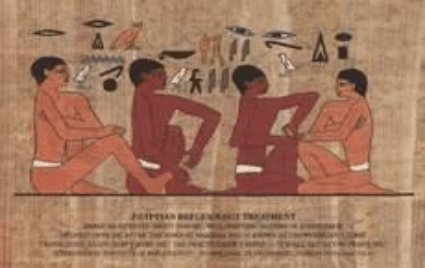
Massage was practiced in ancient Egypt approximately 5,000 years ago (Prochowicz Z., 2000). Although the precise techniques remain unknown, available sources—such as frescoes and papyri—clearly indicate that foot massage was recognized and applied therapeutically at that time. Current interpretations suggest that these practices likely served both hygienic and medical purposes, consistent with present-day understandings of reflexogenic areas of the feet.
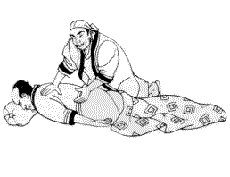
More than 3,000 years BCE, the Chinese work Kung-fu contains references to treatment through massage. It can be argued that the foundations of physiotherapy were established in northern China. This region consisted largely of semi-desert and desert areas where medicinal herbs were scarce; therefore, alternative therapeutic strategies were developed. Heated stones were applied to the body, specific points were warmed using dried mugwort leaves, and subsequently punctured with stone needles—prototypes of later metal acupuncture needles. These practices represent early forms of thermotherapy, acupressure, and acupuncture, which are now partially explained through neurophysiological and connective tissue mechanisms. The first organized school of massage was established in China.
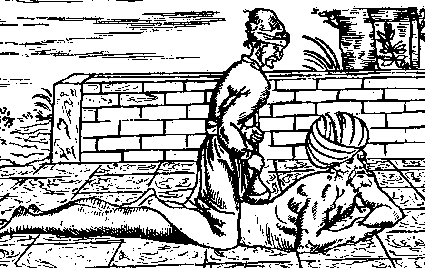
Additionally, Hindu scriptures—the Vedas, dating from approximately 1500–3000 BCE—contain guidelines concerning methods of performing massage treatments, emphasizing both preventive and therapeutic aspects of bodywork.
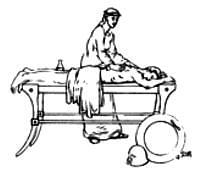
The true development of massage as a therapeutic discipline occurred in ancient Greece. Around 380 BCE, Hippocrates described massage as an integral element of medical treatment, famously stating that “the physician must be experienced in many things, but assuredly in rubbing.” The Greek cult of the body and physical fitness strongly influenced therapeutic practices; during the Olympic Games, athletes routinely used massage before competitions to enhance performance and recovery. Along with Greek culture, massage spread to Rome. Julius Caesar reportedly used techniques of pinching and kneading to alleviate symptoms of sciatica (Podgórski T., 1998), which today would be interpreted as early neuromuscular or myofascial interventions.
The Dark Ages (Middle Ages) marked a period during which such treatments were largely abandoned in Western Europe, mainly due to sociocultural and religious factors. However, manual techniques persisted in Eastern traditions and folk medicine.
The renaissance of massage took place in the 16th century in France. The eminent barber-surgeon, military surgeon, and royal physician Ambroise Paré officially proclaimed massage a legitimate medical treatment method. Another key contributor was the German physician Friedrich Hoffmann (1600–1672), who developed a system of massage techniques tailored to specific disease entities, anticipating modern clinical reasoning in manual therapy.
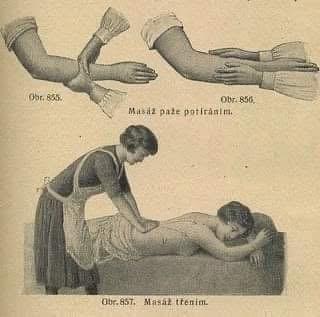
The 19th century marked significant progress, largely due to the Swedish physician Per Henrik Ling, founder of the Royal Central Institute of Gymnastics in Stockholm. He co-created the system of Swedish gymnastics, integrating structured exercise with elements of therapeutic massage, laying the groundwork for modern physiotherapy and movement-based rehabilitation.
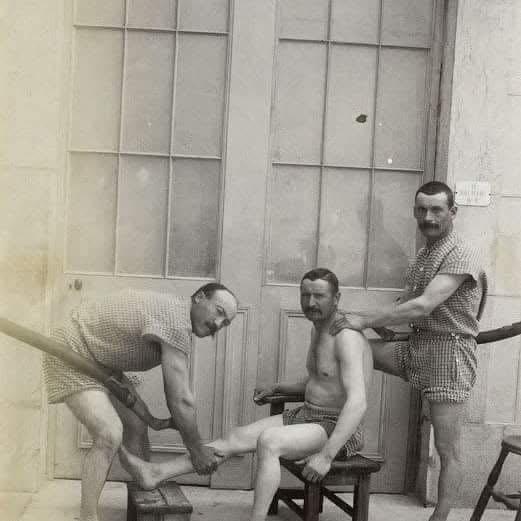
The true father of the classical, scientific school of massage was the Dutch physician Johan Mezger (1839–1906). He systematized massage techniques, defined clear indications and contraindications, and introduced standardized terminology, establishing massage as a scientifically grounded therapeutic modality. A prominent continuator of this work was the Polish physician Izydor Zabłudowski (1851–1906), head of the University Department of Therapeutic Massage. His scientific publications elevated massage to the status of other recognized medical treatment methods.
Scientific validation of earlier empirical observations demonstrated the existence of reflex connections between the skin and internal organs, a concept that remains relevant in contemporary neurophysiology and pain science. These discoveries are primarily attributed to the research of the following physicians:
- MacKenzie and Head (Head’s zones, areas of segmental hypersensitivity),
- Hansen and von Staa (cutaneous–visceral reflex pathways),
- Schmidt (transitional segments),
- Pischinger (the cellular–environmental system, emphasizing the role of connective tissue as a regulatory medium).
Modern research complements these findings by demonstrating the involvement of the autonomic nervous system, central pain modulation pathways, mechanoreceptors, and interoception in the therapeutic effects of massage.
It is also important to acknowledge Polish contributors such as M. Kosiński, professor at the University of Warsaw, and J. Zaorski, founder of a massage school. Further notable authors include Zygmunt Prochowicz (Foundations of Therapeutic Massage), Adam Zborowski (Therapeutic Massage), Leszek Magiera (Classical Therapeutic Massage), Tomasz Podgórski (Classical Massage), and many others not mentioned in this work (Magiera L., 1995).