
• Lower Back Pain and Related Symptoms

    On our website, you’ll find information about various types of lower back pain and associated issues. Here’s a structured overview of common pain patterns:

    • Stiffness and difficulty in straightening or bending the spine – issues with getting upright in the morning or after prolonged sitting.
    • Pain while sitting – discomfort that intensifies during long periods of sitting or standing.
    • Night-time back pain – pain that wakes you up at night or worsens with changes in sleeping position.
    • Pseudoradicular symptoms (pseudoradiculopathy) – pain radiating along the L5-S1 dermatome, mimicking sciatica but with a different origin.
    • Pain in the buttocks and lower limbs – includes pain in the buttock, hamstring, calf, heel, or sole of the foot.
    • Pain in the pelvic floor and tailbone area – can occur during prolonged sitting or with changes in position.
    • Sharp, pinpoint pains – these may worsen with movement, lying on the stomach, or radiate to the groin, front of the knee, or even the testicles in men.

    Thanks to our knowledge and experience with the Kill The Pain method, we help you understand these issues and effectively alleviate them.
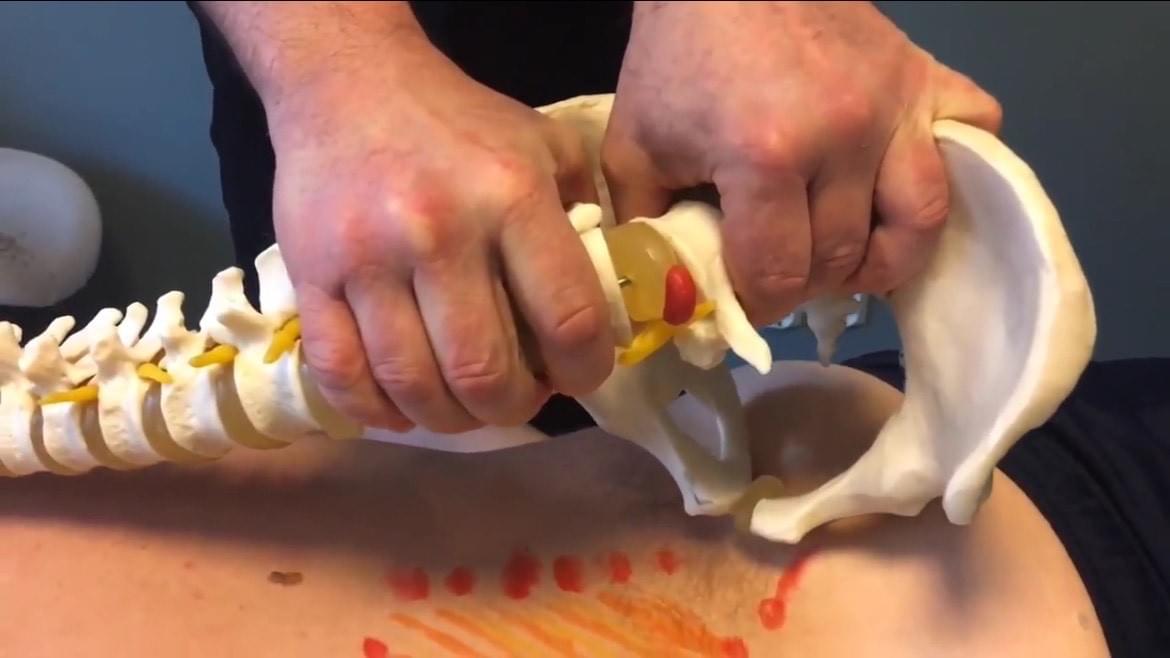
    Join our courses and workshops to gain knowledge that will help you in the fight against pain and improve the quality of life of your patients. Discover New Possibilities in Manual Therapy courses, workshops, training in the fight against pain manual therapy
  • Many commonly diagnosed cases of sciatica aren’t actually true sciatica at all. In fact, for most of these conditions, it’s possible to avoid medication altogether—although, of course, there are times when it may still be necessary. Our innovative pain relief methods are highly effective, and we have plenty of satisfied clients. Your clients will be happy too, and we’ll cover all of this in detail during the course. Additionally, you’ll find more detailed information on our main website, where we discuss how important the client or patient interview is in our approach. When it comes to diagnosing lower back pain, we aim to guide our clients out of the pain drama they find themselves in. That’s why conducting a thorough interview is a key part of our method, and we emphasize this particularly when dealing with lower back pain. Moreover, with this type of pain, pelvic shifts often occur—essentially, the pelvis twists excessively. While these shifts can sometimes be painless, they are frequently quite noticeable in painful cases and can further complicate movement. In exactly these situations, our method proves to be extremely effective.

    In our method, the relief we provide is truly spectacular when it comes to sharp, pinpoint, stabbing pains that interrupt a client’s movement and stop them from continuing smoothly. In these scenarios, our approach is extremely effective.