

Why do some patients spontaneously load one lower limb more than the other? Why does asymmetrical weight distribution often coexist with pain, postural disturbances, and movement limitations? Most importantly, is it merely a consequence of an existing dysfunction, or could it represent an adaptive strategy used by the body?
To address these questions, it is helpful to stop viewing individual joints as isolated structures. The hip does not function locally. It is part of a global force-transfer system involving the lower limbs, pelvis, spine, and soft tissues responsible for transmitting loads between different body segments.
If the body maintains posture and produces movement through the coordination of muscular tension and the distribution of forces, then the lower limbs become the biomechanical expression of this process. This is most evident during gait, which relies on a continuous transition between two fundamental tasks: support and propulsion.
During the support phase, the limb accepts body weight and stabilizes the entire system. During the propulsion phase, stored energy is used to generate forward movement and prepare for the next step. Efficient gait requires smooth cooperation between these two mechanisms.
The hip plays a particularly important role in this process. It can be viewed as a strategic transmission hub between the body's axis and the lower limb. In simplified terms, two functionally distinct regions of the hip can be identified.
The region of the greater trochanter is primarily associated with stabilization and load-control mechanisms. It includes the gluteus medius, gluteus minimus, piriformis, obturator muscles, gemelli, and the short external rotators of the hip. These structures are mainly responsible for pelvic stabilization, rotational control, and maintaining optimal hip joint alignment during weight acceptance. Their primary role is not to generate movement, but to create the conditions necessary for efficient force transfer throughout the body.
The region of the lesser trochanter is primarily associated with the iliopsoas muscle and participates in initiating limb advancement and preparing the next step. However, propulsion during gait results from the coordinated action of multiple structures, particularly the calf muscles, foot, hamstring group, and gluteus maximus, which work together to transfer energy forward.
From a biomechanical perspective, efficient locomotion requires harmonious interaction between the stabilization system and the propulsion system. When the balance between them is disrupted, the distribution of body weight between the lower limbs often changes as well.
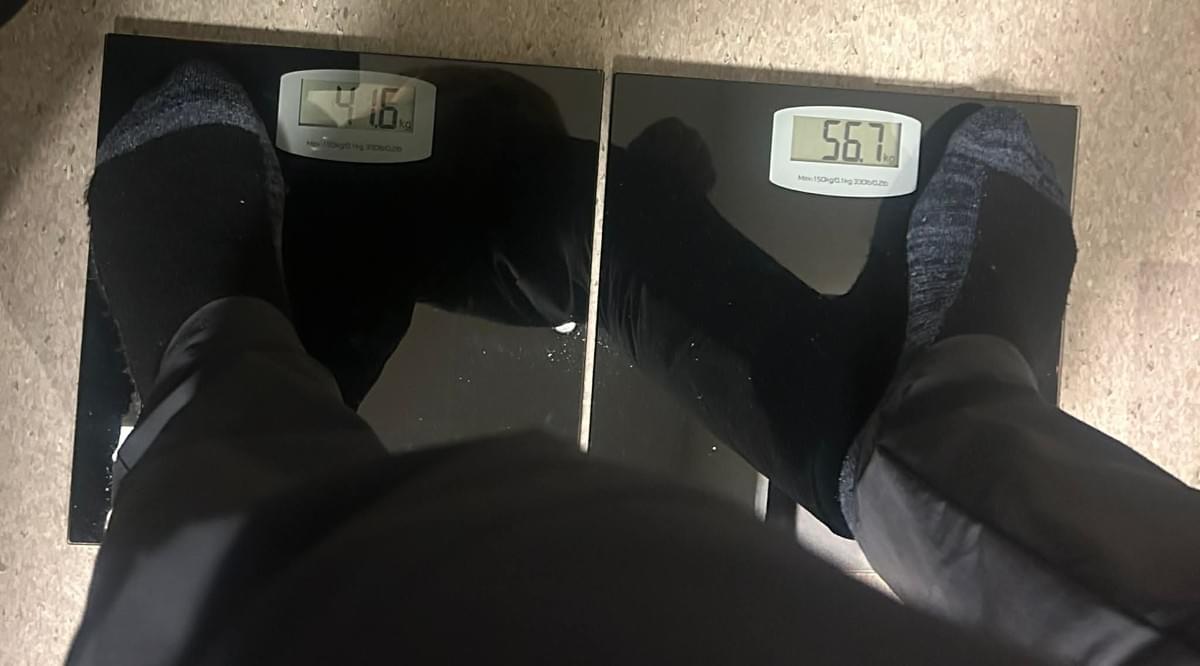
This is where the Two Scales Test comes into play.
In its simplest form, the test evaluates asymmetrical weight distribution between the lower limbs during standing. It does not directly measure the activity of specific muscles or the nervous system. Instead, it reflects the final outcome of the biomechanical, sensory, and motor mechanisms involved in postural organization and load distribution.
When a patient does not load both limbs equally, it may suggest the presence of compensatory strategies related to pain, stabilization, balance control, or movement organization. Clinical observations indicate that asymmetrical loading often decreases following interventions aimed at improving the function of the pelvis, hip, and lower limbs. However, this does not mean that asymmetry itself is the cause of symptoms, nor that reducing it automatically reflects normalization of function.
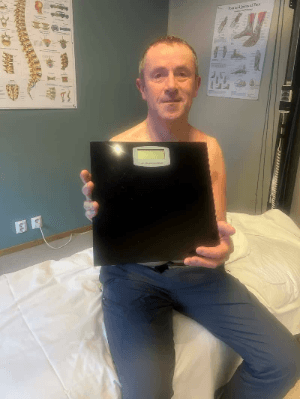
It remains unclear whether asymmetrical loading is primarily a compensatory mechanism, a consequence of existing dysfunction, or a combination of both. For this reason, the Two Scales Test should be regarded primarily as a clinical observation tool. It may provide indirect information about the integration of loads and force transfer between body segments, serving as a useful complement to functional assessment. Its precise diagnostic significance, however, requires further investigation.
Perhaps asymmetrical weight distribution is merely an accompanying phenomenon. Perhaps it represents one component of a broader movement algorithm through which the body organizes stability, locomotion, and force transfer across the entire system. At present, this remains a hypothesis requiring further verification, but that is precisely what makes it interesting from both a biomechanical and clinical perspective.
In this perspective, the Two Scales Test becomes a clinical window into the body's global kinesiology. By observing asymmetrical weight distribution, we are not searching for a single muscle to blame; rather, we are analyzing how the entire organism organizes forces in response to gravity.